Case study 02 / 04
Vorena AI
Team product · Kompella TechnologiesAn AI shopping assistant for Shopify stores — conversational product discovery instead of keyword search.
- Role
- Full Stack Developer → Technical Program Manager, Kompella Technologies
- Timeline
- February 2026 – Present
- Stack & tools
- Shopify app · LLM integration · Vision AI · Semantic search · Embeddings
- Live
- vorena.ai
At Kompella Technologies I contribute to Vorena across engineering and delivery: product requirements, feature development, roadmap and releases, and merchant go-to-market coordination.
01
Overview
Vorena is an AI shopping assistant that installs on Shopify stores. A shopper describes what they want in plain language; the assistant understands the intent, asks a follow-up when it needs to, and recommends products from that store's catalogue — with current price and stock — that can be added to the cart inside the conversation.
Vorena is built by a team at Kompella Technologies and founded by Ganesh Kompella. I joined as a Full Stack Developer in February 2026 and moved into the Technical Program Manager role in July 2026, so my contribution spans hands-on engineering and product delivery.
02
Context
Merchants pay to bring visitors to their store, but on-site search is usually keyword matching against titles and tags. Tags are incomplete, and shoppers rarely know the exact words a merchant used. Vorena is sold through the Shopify App Store as an install-and-configure app: connect the store, choose the industry and tone, publish the storefront embed.
03
Problem
Traditional search requires customers to know exactly what they're looking for. Real intent sounds more like “a gift for my dad who loves coffee, under $80” or “something cozy for a winter wedding” — none of which matches a product title.
- Shoppers describe needs, occasions and budgets — not SKUs or tags.
- Catalogue data is thin: merchants rarely finish tagging colour, material, fit or occasion.
- A recommendation is only useful if price and availability are current and the product is one tap from the cart.
- Every merchant's brand, catalogue and tone are different, so the assistant must be configurable per store.
04
My role
This is team work — I don't claim the product as mine. What I contribute, across my developer and TPM responsibilities:
- Product roadmap and release delivery — planning, sequencing and shipping releases.
- Hands-on engineering and feature development.
- Product requirements — turning business needs into scoped features and acceptance criteria.
- Merchant go-to-market coordination.
- Working across technical and business requirements so both sides agree on what ‘done’ means.
05
Approach
The product is designed around the shopper's sentence rather than the merchant's taxonomy. Four layers turn a raw catalogue into something that can hold a conversation: vision enrichment, semantic understanding, guided conversation, and add-to-cart. My delivery work keeps those layers shipping in a sensible order — what's on sale today (Lite and Starter plans) is clearly separated from what's coming (Growth and Scale).
06
User experience
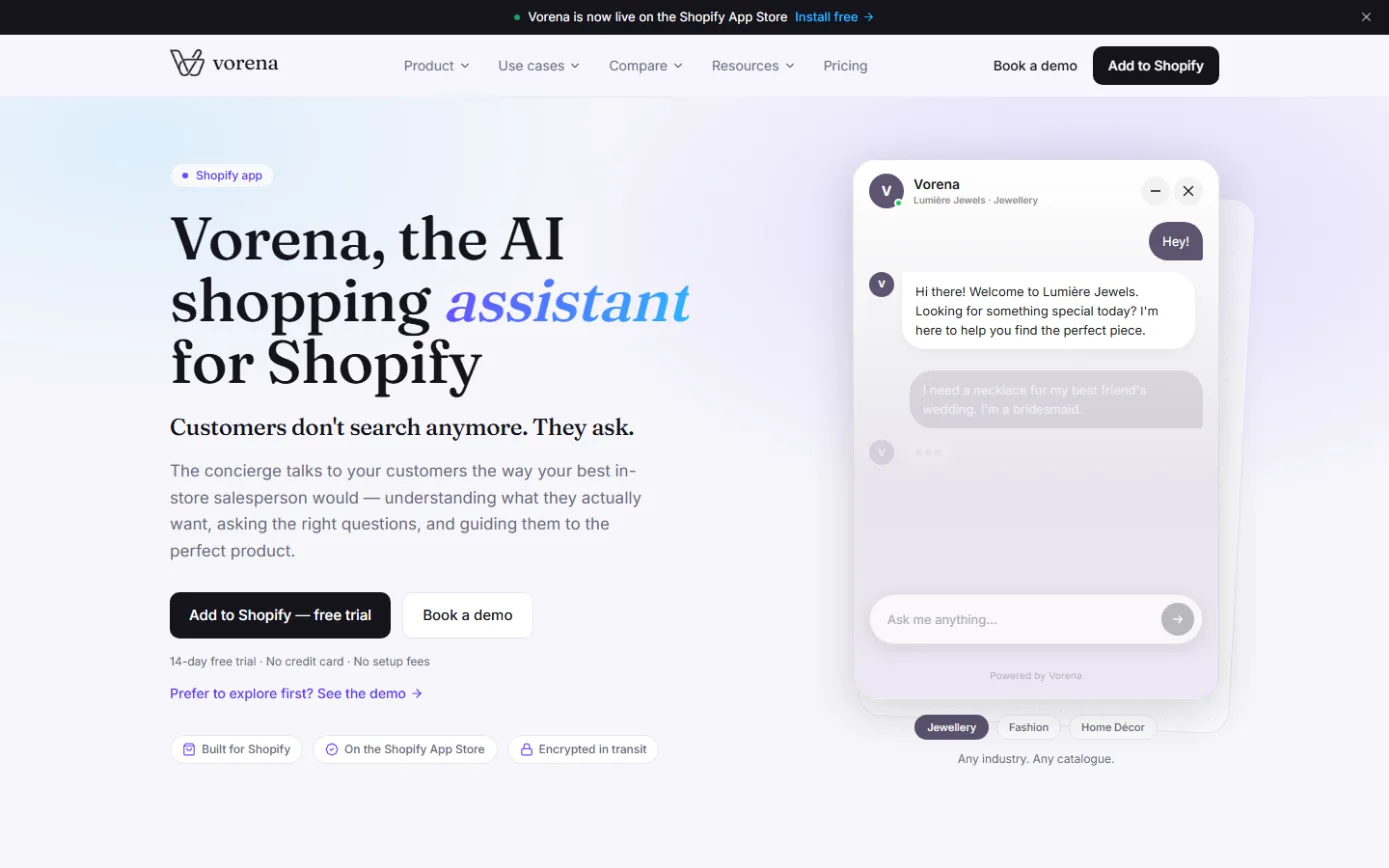
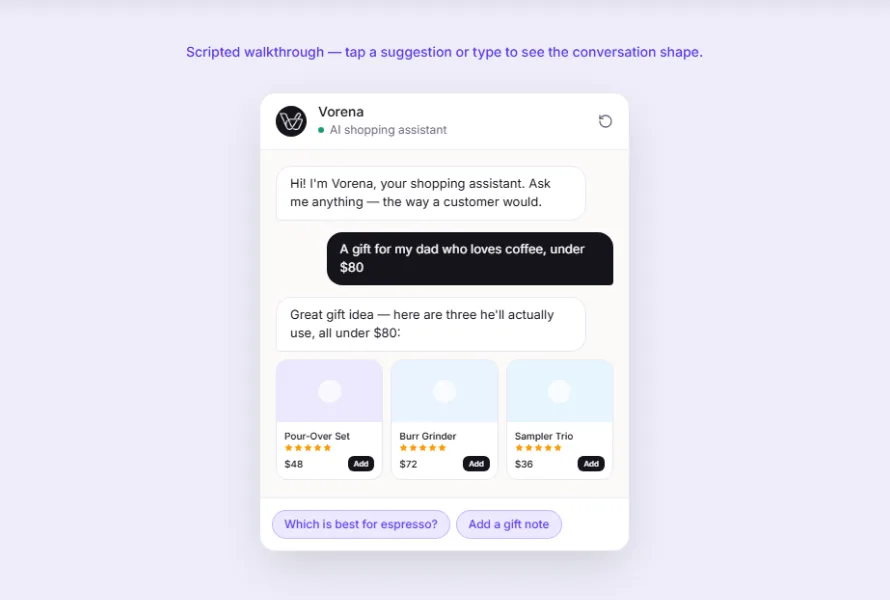
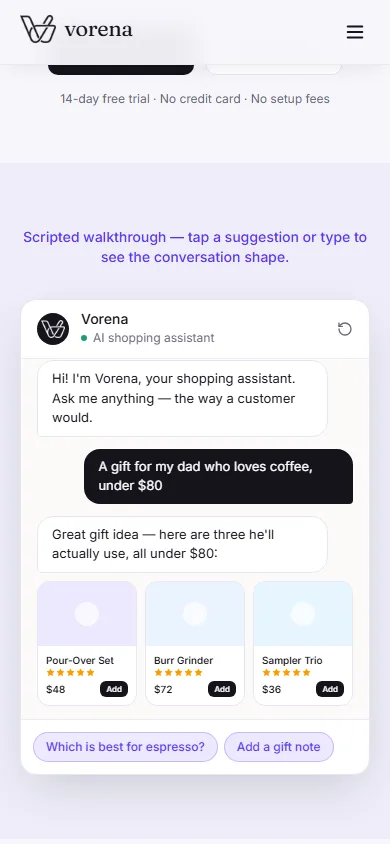
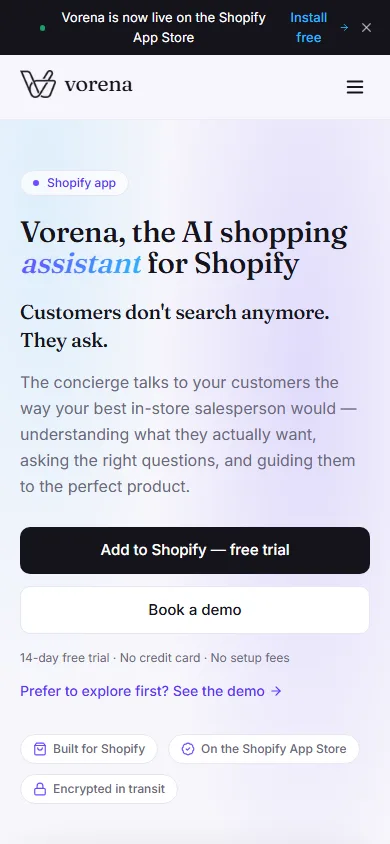
The screenshots below are from vorena.ai. The conversation is the site's scripted demo, which illustrates the shape of the experience rather than a live store.
Conversational discovery
The shopper opens the assistant on the storefront and asks in their own words. Instead of a results grid, the assistant answers like a salesperson would — acknowledging the need, then offering a short, relevant set of options and suggested follow-ups (“Which is best for espresso?”, “Add a gift note”).
Catalogue enrichment
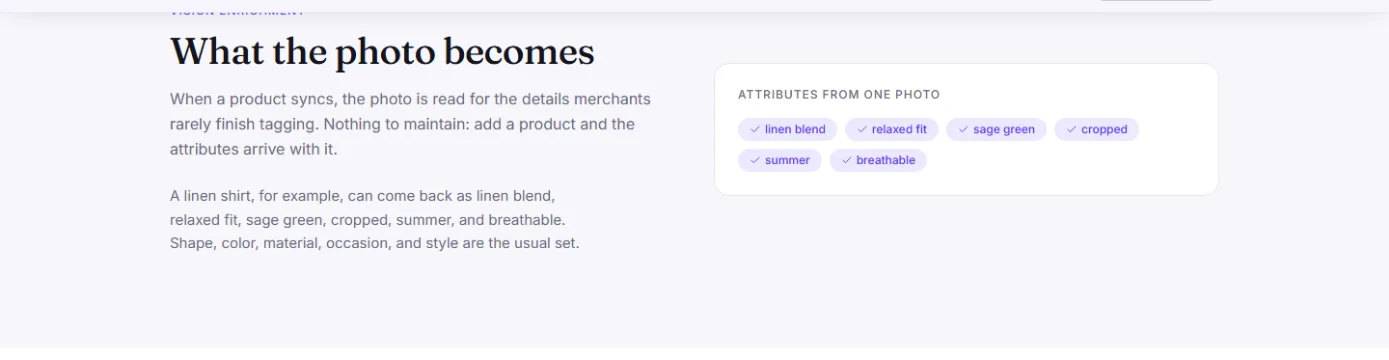
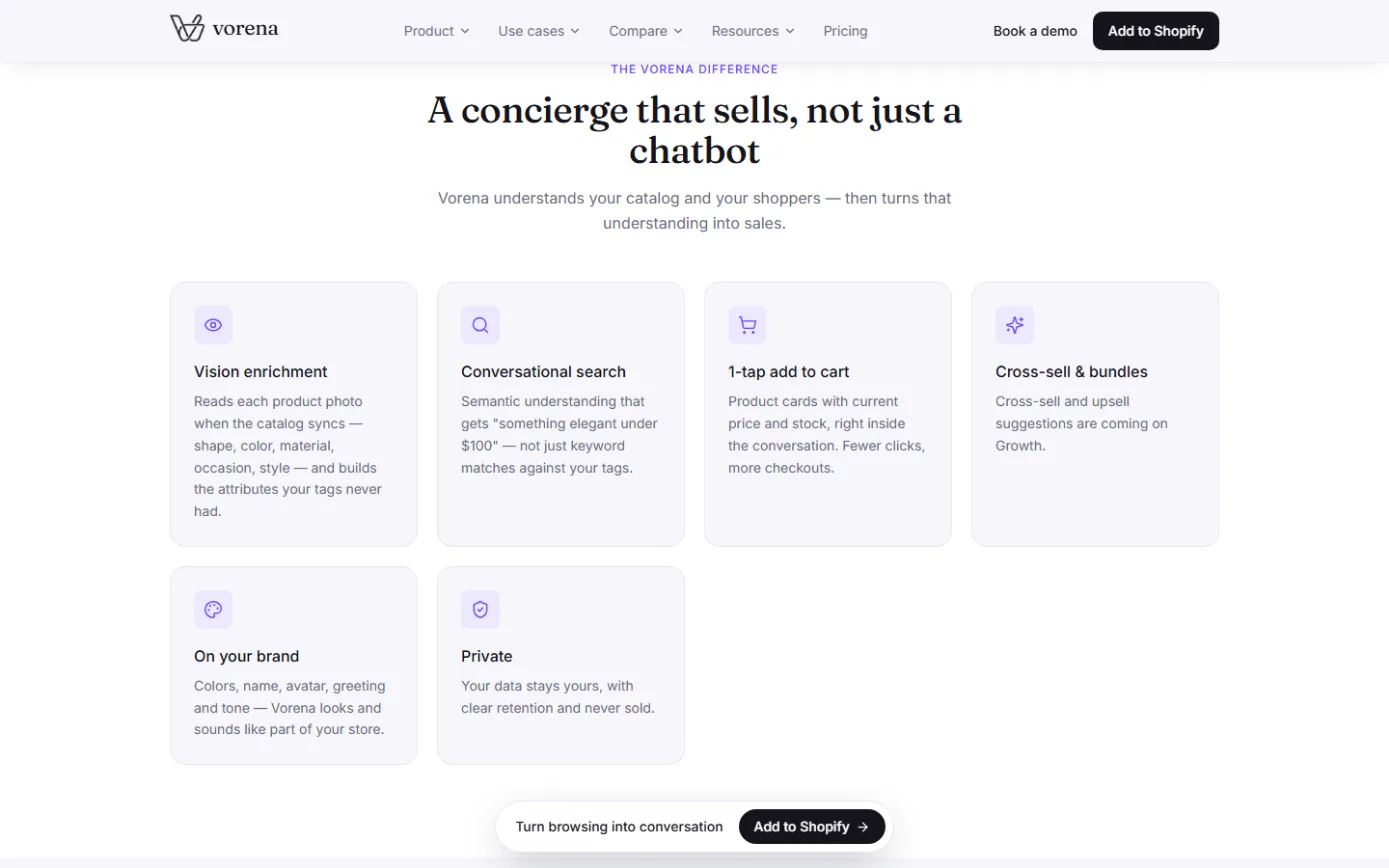
When the catalogue syncs, product photos are read for shape, colour, material, occasion and style — the attributes merchants rarely finish tagging. A linen shirt can come back as linen blend, relaxed fit, sage green, cropped, summer, breathable. That enrichment is what lets a plain-language request match the right product.
Recommendation and add to cart
Recommendations arrive as product cards with current price and stock, each with an Add action. The whole journey — first question to cart — happens inside the conversation, so the shopper never has to leave it to act on a suggestion.
07
Design decisions
- A conversation, not a search box. The assistant can sit alongside the store's search, but the interaction model is dialogue.
- Ask before guessing. Clarifying questions narrow intent instead of returning a long, weak list.
- Handle dead ends gracefully. Out-of-stock items lead to alternatives, so the shopper always has a next step.
- Merchant-specific configuration. Name, colours, avatar, greeting and tone make the assistant feel like part of each store.
- No-code install. App Store install, automatic catalogue sync and a theme app embed — no theme code to edit.
08
Technical implementation
At a high level, Vorena is a Shopify app with a catalogue pipeline and a conversational layer. This describes the publicly documented architecture; it is the team's system, not mine alone.
- Shopify integration — app install, catalogue sync, and a storefront app embed that renders the assistant.
- Vision-based enrichment — product images are analysed at sync to generate structured attributes (plan limits apply: 100 products on Lite, 250 on Starter).
- Semantic search — enriched product data is indexed with embeddings so retrieval matches meaning, not just keywords.
- LLM conversation layer — interprets intent, asks follow-ups and composes recommendations from retrieved products.
- Live commerce data — price and availability are read at answer time; add-to-cart happens inside the conversation.
- Per-merchant configuration — industry, tone and brand settings shape each store's assistant.
01
Shopify store
Install, catalogue sync
02
Vision enrichment
Attributes read from product photos
03
Semantic index
Embeddings over enriched catalogue
04
Conversation layer
Intent, follow-ups, recommendations
05
Storefront embed
Product cards, price, stock, add to cart
09
Key challenges
- Keeping answers grounded in each store's actual catalogue, price and stock rather than plausible-sounding inventions.
- Making one assistant work across very different industries — fashion, jewellery, home, beauty, electronics.
- Being explicit about scope: shipping what's ready (Lite and Starter) while clearly labelling what's coming.
- Aligning engineering, business and merchant-facing needs into a release plan everyone can work from.
10
Outcome
Vorena is live on the Shopify App Store, with the Lite and Starter plans on sale and a 14-day free trial. I continue to work on its roadmap, releases and engineering. Adoption and revenue figures aren't mine to publish, so they aren't included.
11
What I learned
- AI features need product framing as much as model quality: grounding, fallbacks and clear limits are what make them trustworthy.
- Moving from developer to TPM on the same product made requirements sharper — I know what a vague ticket costs downstream.
- Go-to-market constraints (App Store listing, plan limits, onboarding) shape the product as much as the roadmap does.
Next case study
YUCA